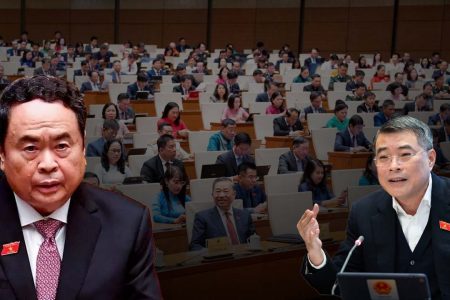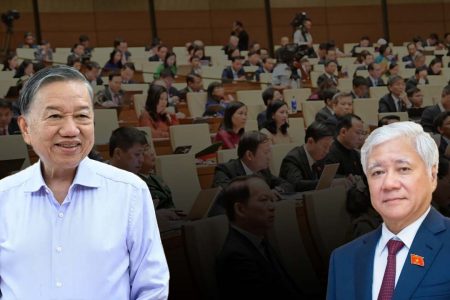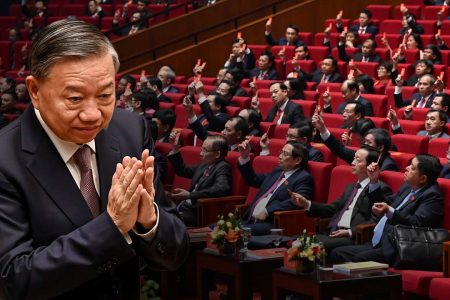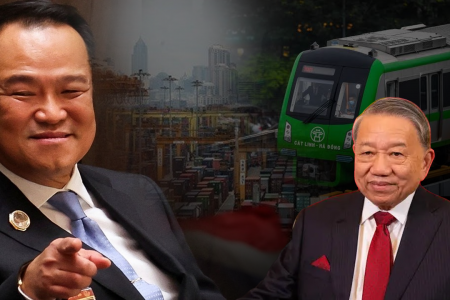
Discussions at the National Assembly over the past few days have witnessed unprecedented conflicting statements among local leaders regarding the double-digit GDP growth target.
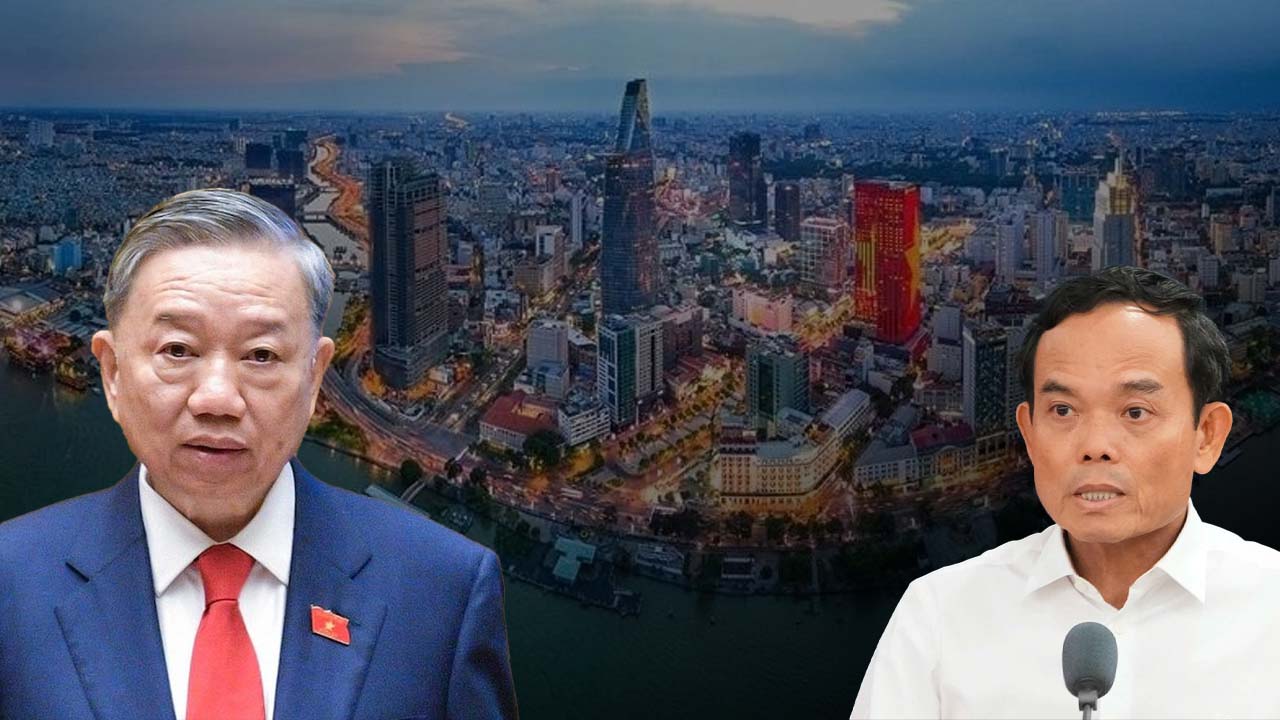
Alongside the firm declaration by Quang Ninh Party Secretary Quan Minh Cuong, who asserted that the province must absolutely achieve growth of over 10%. Mr. Cuong even went so far as to make a bold bet: “If it’s below 10%, then both the Party Secretary and the Chairman should be removed from office.”
However, on the other hand, Ho Chi Minh City Party Secretary Tran Luu Quang adopted a much more cautious stance when he stated: “If Ho Chi Minh City fails to meet the target, we will apologize to everyone and strive harder next year.”
According to analysts, this stark contrast is not merely a difference in personality or leadership style. Rather, it exposes a deep rift between the political resolve of the top leadership and the practical limitations of Vietnam’s economy at this time.
Accordingly, the double-digit GDP growth target is a macroeconomic ambition that General Secretary and President To Lam has consistently urged the entire political system to achieve, aiming to create momentum for a breakthrough in the 2025–2026 period.
However, the data and realistic assessments presented in the National Assembly paint a completely different picture. As National Assembly Deputy Nguyen Ngoc Son warned, the pressure to meet the growth target is immense, as only 6 out of 34 localities nationwide are projected to achieve the set target.
More concerning is that the National Assembly’s Economic and Financial Committee has issued a “red alert” regarding the lack of sustainable growth.
This is particularly concerning given that the country’s four largest economic hubs—Ho Chi Minh City, Hanoi, Hai Phong, and Dong Nai—which together account for nearly 47% of the nation’s total economic output, are all projected to fall short of their 2026 growth targets.
Meanwhile, Prime Minister Le Minh Hung remains steadfast in his declaration that the government is still determined to set a growth target of 10% or higher for 2027.
Notably, Party Secretary Tran Luu Quang’s “apology” carries the weight of a reality that cannot be sugarcoated. As the leader of the country’s largest economic hub affirmed that Ho Chi Minh City will not chase growth figures at any cost through “short-term, quick-fix” approaches like other localities.
Ho Chi Minh City’s decision to postpone land auctions worth over 90,000 tỷ đồng to accumulate resources for future years demonstrates that city officials are beginning to resist the pressure to pursue short-term growth.
According to international analysts, forcing provinces and cities to achieve double-digit growth targets at any cost only pushes them into a vicious cycle of squeezing every last drop from the budget or resorting to massive public investment borrowing—creating “artificial growth figures on paper” that leave a burden of debt and inflation for the future.
Moreover, the stark reality revealed in these reports highlights a long-standing, painful issue within the system: the obsession with performance metrics and the tendency to manipulate data.
The fact that most localities are unable to meet their growth targets, yet only a few leaders dare to publicly acknowledge these difficulties, exposes a widespread practice of embellishing reports to please superiors.
Even Mr. Quan Minh Cuong, when he was “in high spirits” making a statement, had to admit: It is impossible to impose a uniform double-digit growth target on every locality, because provinces like Cao Bang must shoulder other important tasks rather than engage in unnecessary competition.
The stark contrast between Mr. To Lam’s political resolve and the “apologetic” statements from local leaders shows that the growth model reliant on political directives is heading straight for a cliff.
It is time for leaders in Ba Dinh to heed the frank warnings from the field, rather than continuing to pressure the bureaucracy with arbitrary growth targets.
Tra My – Thoibao.de