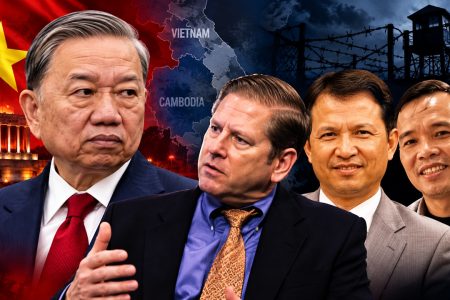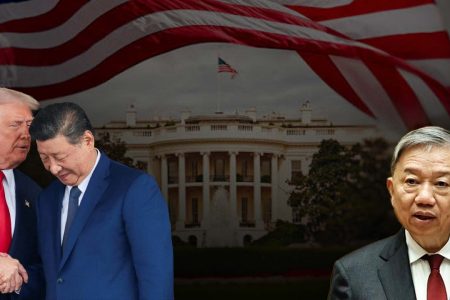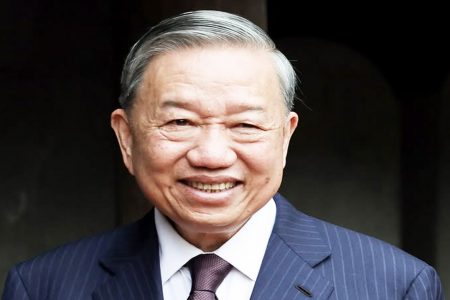
In an official interview with Bloomberg TV in New York on September 21, 2026, General Secretary and President To Lam delivered a very strong message: “Vietnam firmly refuses to accept the transshipment of goods to evade taxes; all exported products must be genuine and produced in Vietnam.”
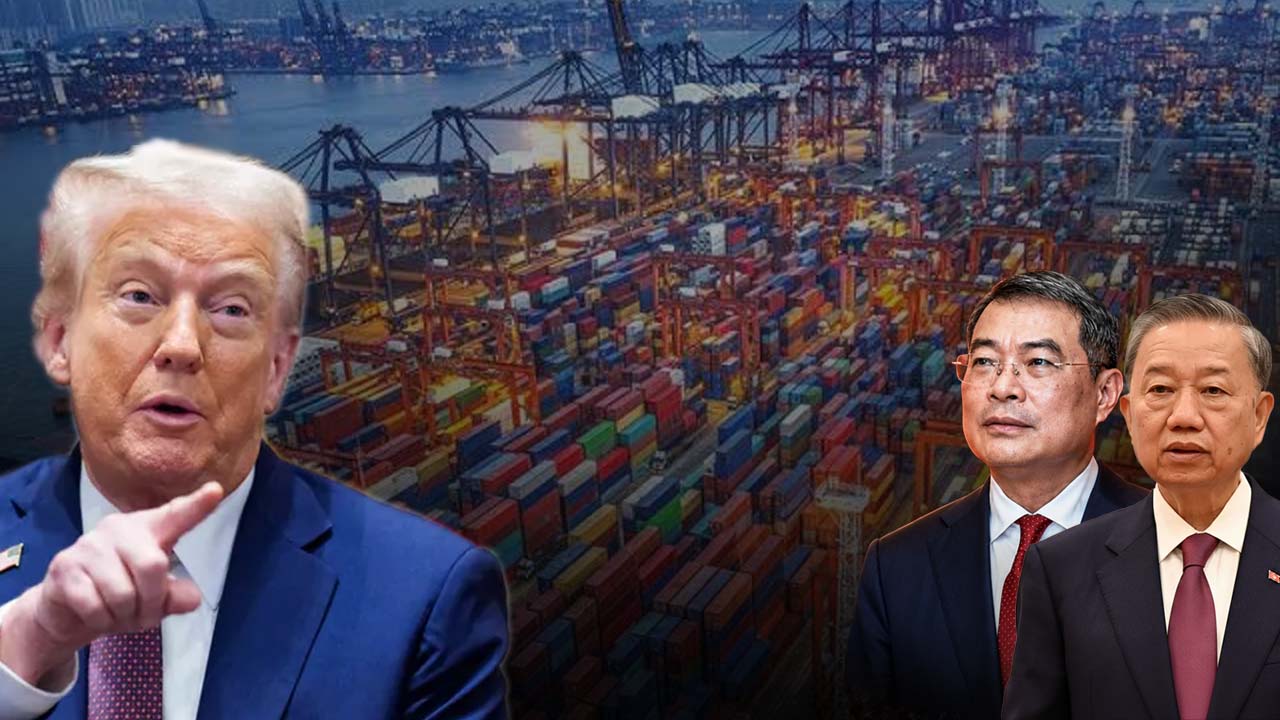
This was a landmark statement by Mr. To Lam aimed at appeasing the United States amid Vietnam’s record-high trade surplus with the U.S. of $114 billion—a figure that surpasses that of many other middle-income countries.
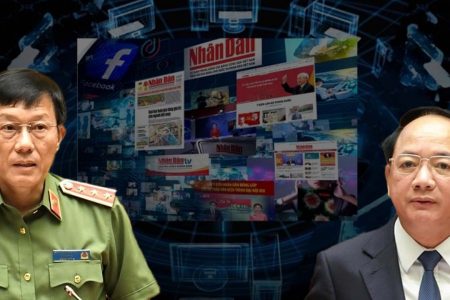
However, what sparked intense debate immediately afterward was not Mr. To Lam’s statement itself, but rather the way Vietnam’s state-run media reported the incident.
According to observations by international political analysts, when publishing the full text of the interview in a “question-and-answer” format, Vietnam’s state-run media—for reasons unknown—deliberately omitted Mr. To Lam’s response refuting allegations that Vietnam was transshipping Chinese goods, while also cutting out the section detailing the planned procurement of high-tech products from the U.S.
This rare incident immediately sparked “malicious” speculation on social media, with many suggesting that the Vietnamese government panicked and attempted to conceal information out of fear of a reaction from Beijing.
According to analysts, this editorial move exposes the Vietnamese government’s complex and risky position of being “caught between two fires” on the international geopolitical stage as well as within the region.
Experts from the ISEAS–Yusof Ishak Institute of Southeast Asian Studies note that toning down direct statements regarding China in the press is an extremely cautious diplomatic move.
Accordingly, China is not only a neighboring country but also Vietnam’s largest trading partner, supplying a significant portion of the raw materials for Vietnam’s manufacturing economy.
Publishing Mr. To Lam’s statements—which are directly confrontational toward Beijing—in the mainstream press could be viewed as an unnecessary provocation, further complicating the already highly sensitive bilateral relationship between the two countries.
Beyond diplomatic considerations, the editorial standards of Vietnam’s state-run media tend to frame statements by high-ranking leaders within a safe, standardized framework, rather than delving deeply into contentious disputes.
However, this restraint in the media stands in stark contrast to the aggressive legal actions the Vietnamese government is currently taking in practice.
Vietnam is currently the only country facing three simultaneous U.S. Section 301 investigations related to currency manipulation, labor practices, and excess production capacity.
Aware of the existential threat to its largest export market—the U.S.—the Vietnamese government has continuously tightened the process for issuing Certificates of Origin, while conducting a series of surprise inspections of factories suspected of engaging in “simple assembly” to fraudulently claim origin.
The fact that the U.S. had previously imposed punitive tariffs of over 540 percent on solar panels using Chinese components forced Hanoi to take uncompromising action.
The contrast between the cautious, almost timid, tone in public statements and the tight grip of regulatory enforcement in practice clearly illustrates the pragmatic strategy of the Le Minh Hung administration.
Vietnam has chosen to protect its core economic interests with the U.S. through discreet yet decisive measures, while still striving to maintain a soft diplomatic stance in the mass media so as not to offend its neighbor, Beijing.
However, the Vietnamese government’s overly blatant censorship of press coverage has diminished the weight of Mr. To Lam’s commitments to the international community and has plunged the Communist Party of Vietnam into unnecessary internal doubts.
Tra My – Thoibao.de